
In Silico Study of the Potential of Low-Dose Hydrogen Peroxide (H2O2) as a Complementary Therapy to L-DOPA for the Prevention of Alpha-Synuclein Dysfunction In Parkinson's Disease
Athiyah Layla, Sri Widyarti, Sutiman Bambang Sumitro
THESIS SUMMARY
Parkinson's disease (PD) is a neurodegenerative disorder that causes memory and cognitive impairment, tremors, and painful muscle contractions. PD is characterized by reduced dopamine production, hence the treatment of PD is done by administering dopamine precursor, L-DOPA. Treatment with L-DOPA was chosen because it can provide dopamine according to the needs of each individual. In addition, PD is also characterized by intraneuron α-synuclein (αsyn) dysfunction. L-DOPA requires energy to convert into dopamine. This can be disrupted due to insufficient energy available, because the interaction between αsyn dysfunction and Voltage-Dependent Anion Channel (VDAC) which causes mitochondrial dysfunction in neuronal cells. Especially the ability of αsyn to bind VDAC on the outer membrane mitochondria (OMM) so that it can block and translocate to the inner membrane mitochondria (IMM).
In PD patients, dopamine reuptake by the dopamine transporter (DAT) does not function properly due to the dysfunction of αsyn that binds to DAT, causing excess dopamine in the synaptic cleft. As well as the presence of αsyn aggregates and monomers that can be transferred between neuronal cells causing PD patients to worsen, the spread mechanism is mediated by low-density lipoprotein receptor-related protein 1 (LRP1). In addition to causing mitochondrial dysfunction in neuronal cells, αsyn also causes dysregulation and mitochondrial dysfunction in the endothelium of cerebral blood vessels to undergo apoptosis. In this case, apoptosis of the cerebral vascular endothelium will affect the performance of the BBB, which can eventually lead to neurodegeneration. Therefore, treatment is needed that can prevent vascular degeneration by activating ERK1, ERK2, ERK5 and ASK1 which can control endothelial cell proliferation.
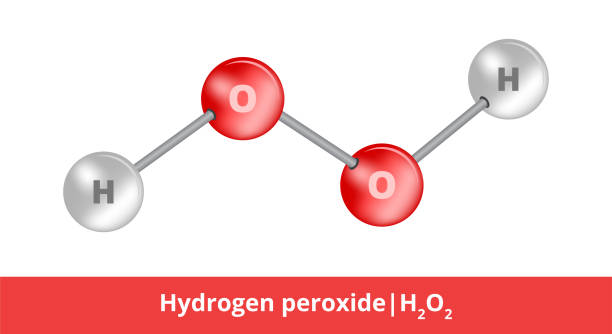
Treatment using L-DOPA cannot overcome mitochondrial dysfunction, dopamine reuptake dysregulation, αsyn interneuron spreading and endothelial cell apoptosis. So that the administration of L-DOPA becomes ineffective and requires low-dose H2O2 which has neuroprotective potential as one of the complementary therapies for PD. This study aims to further examine the effectiveness of low-dose H2O2, in order to build a more effective LDOPA therapy. The research was conducted in silico, starting with data collection for H2O2 molecules from pubchem, αsyn and target proteins (VDAC, DAT, LRPR1, ERK1/2/5 and ASK1) from the protein data bank (PDB). Then the preparation was carried out on H2O2 using Open Babel in PyRx 0.9.8 software, αsyn and target proteins were prepared using Discovery Studio 2021 Client. Furthermore, H2O2 docking was carried out with αsyn protein using PyRx 0.9.8 and docking between αsyn and target protein using HDOCK online software, then analyzed the binding affinity and binding site. Followed by molecular dynamic simulation (MD) using YASARA Structure v.23.9.29, to evaluate the stability of the simulated system, it is necessary to analyze: molecular mechanic poisson-boltzmann surface area (MMPBSA), root mean square deviation (RMSD), backbone root mean square fluctuation (RMSF), Radius of Gyration (Rg), and superimpose.
The results of molecular docking showed that H2O2 can reduce the binding affinity of αsyn monomers and polymers to the target protein. The decrease in binding affinity indicates that the H2O2 molecule has the potential to prevent monomer and αsyn polymer from binding to the target protein. Inhibition of H2O2 molecules with αsyn monomers and polymers can also affect its active site on the target protein, causing changes in interactions. The presence of H2O2 molecules can change hydrogen bonds into unfavorable bonds that can reduce the stability of the complex, thus allowing the docking of αsyn monomers and polymers and target proteins to be unstable. The results of molecular dynamics show that the presence of H2O2 can affect the value of RMSD, for example, when the monomer and αsyn polymer are tethered to VDAC and DAT, it can increase the value of RMSD which results in unfolding the protein so that the protein becomes non-functional. However, when H2O2 molecules are present, it decreases the RMSD value on VDAC and DAT, which allows VDAC and DAT to become functional.
In the docking between αsyn and LRP1, when H2O2 molecules are present, the RMSD value becomes higher, so that LRP1 is not functional, which causes LRP1 to be unable to bind αsyn protein, so that the transfer of αsyn between neuronal cells can be prevented. The presence of H2O2 molecules increases the fluctuation (RMSF value) at the active site residue between the αsyn protein and the target protein, making it possible to detach the bond between the αsyn monomer and polymer on the target protein. H2O2 docking results with ERK1/2/5 and ASK1, showed that the H2O2 molecule activates ERK1/2/5 and ASK1 by binding to phosphorylation sites of ERK1/2/5 and ASK1. As well as H2O2 molecule stabilizes ERK1/2/5 and ASK1, indicated by decreasing RMSD value. In several studies, it has been shown that a low RMSD value indicates that phosphorylation occurs, so that ERK1/2/5 and ASK1 become active. However, in this study, further MD simulation is still needed, by adding phosphate molecules to ensure that phosphorylation occurs.
Thus, it can be concluded that the mechanism of H2O2 in preventing αsyn monomers and polymers from binding to target proteins is by decreasing their binding affinity and causing changes in interactions. In addition, H2O2 increases fluctuations in the active site, causing the protein-ligand complex to become more flexible which allows the release of the bond between the αsyn monomer and polymer with the target protein. As well as with H2O2 molecules activate ERK1/2/5 and ASK1. Thus, it is known that, H2O2 has the potential to be a complementary therapy to L-DOPA, and can optimize PD treatment.