
Hydrogen-Oxygen Nanobubble Therapy as a Complementary Approach in a Female Patient with Duchenne Muscular Dystrophy (DMD): A Case Report
Gatot Sudarwanto and Athiyah Layla
Abstract
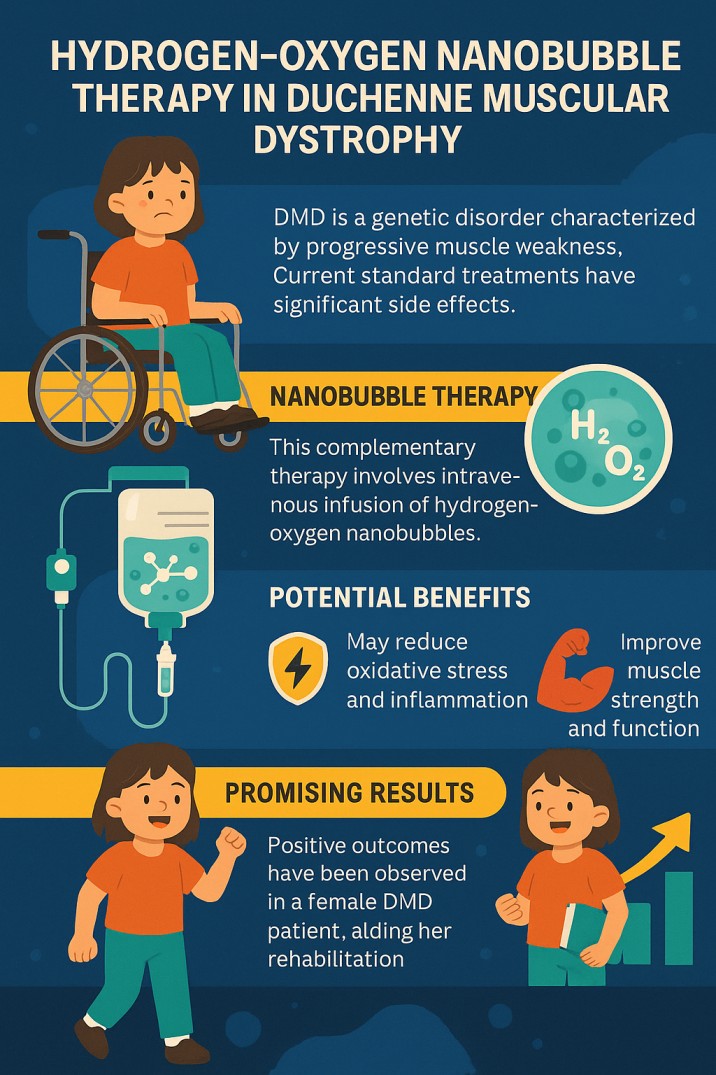
Background: Duchenne Muscular Dystrophy (DMD) is a severe X-linked neuromuscular disorder characterized by progressive muscle weakness due to mutations in the dystrophin gene. Although predominantly affecting males, rare cases have been reported in females. Current standard management with corticosteroids improves function but is limited by significant long-term adverse effects. Therefore, novel complementary therapies with fewer side effects are needed. Case Presentation: We report the case of an 18-year-old female with genetically confirmed DMD presenting with progressive lower limb weakness, difficulty standing, waddling gait, and positive Gower’s sign. The patient underwent 20 sessions of intravenous hydrogen-oxygen nanobubble (NBHHO) therapy in combination with physiotherapy and nutritional supplementation. After 10 sessions, she demonstrated improved sit-to-stand time (<20 seconds), negative Gower’s sign, and enhanced lower limb muscle strength (from 4/5 to 5/5). Upon completion of 20 sessions, the patient was able to ambulate independently without assistive devices and actively participate in daily and academic activities. Discussion: This case highlights the potential role of NB-HHO therapy in reducing oxidative stress and inflammation—two key mechanisms in DMD progression—while supporting mitochondrial function and oxygen delivery. The observed clinical improvements suggest that NB-HHO may serve as an effective complementary therapy to enhance rehabilitation outcomes in DMD. However, its safety and efficacy require validation in larger clinical trials. Conclusion: Hydrogen-oxygen nanobubble therapy, in combination with conventional rehabilitation, may represent a promising adjunctive approach for female DMD patients. Further research is warranted to establish its therapeutic potential and long-term benefits.
Keywords: duchenne muscular dystrophy; female; nanobubble therapy; hydrogen-oxygen; rehabilitation
Share Link of this manuscript is available at: https://doi.org/10.20944/preprints202509.1031.v1