Indonesia Molecule Institute (IMI) Introduces Hydrogen Nanobubble Therapy at Universitas Katolik Widya Mandala Surabaya
10:01, 26 March 2025 by admin
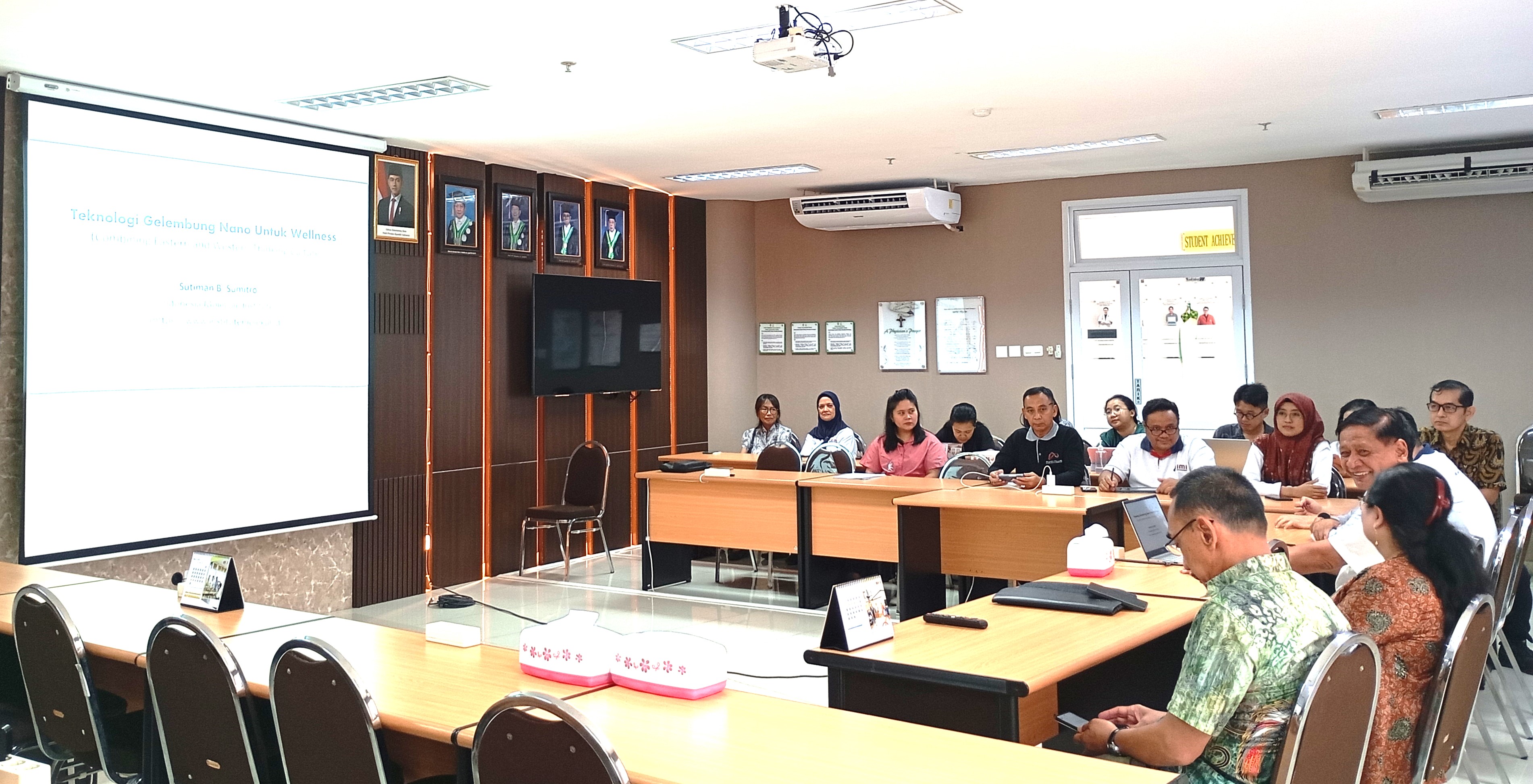
Surabaya, March 21, 2025 – As part of its mission to promote innovative molecular-based therapy, Institut Molekul Indonesia (IMI) held a socialization event introducing Hydrogen Nanobubble Therapy at Universitas Katolik Widya Mandala Surabaya (UKWMS). Held on Friday, March 21, the event aimed to provide a deeper understanding of the significant potential this therapy holds in the medical and health fields.
The event was attended by the Rector of UKWMS, Sumi Wijaya, S.Si., Ph.D., Apt.; Rear Admiral (Ret.) dr. Herjunianto, SpPD, MMRS., Dean of the Faculty of Medicine UKWMS; Prof. Sutiman Bambang Sumitro, SU., D.Sc, Advisor to IMI; Mr. Kan Eddy, IMI Advisor and Chairman of the Reverse Aging and Homeostasis (RAHO) Club; Prof. Akhmad Sabarudin, S.Si., M.Sc., Dr.Sc., Chair of IMI; dr. Aditya Tri Hernowo, Ph.D., Head of the Research and Development Division of IMI–RAHO Club; as well as lecturers from the UKWMS Faculty of Medicine and the IMI executive team.
The event opened with remarks from the Rector of UKWMS, who expressed full support for the advancement of research and innovation in the field of health. She also shared her appreciation for IMI’s presence, noting that it brought fresh insights and perspectives to the world of healthcare. The next speech was delivered by the Chair of IMI, Prof. Sabar, who expressed hopes for future collaboration between IMI and UKWMS. "Collaboration with academic institutions is a key priority for IMI," he stated. "Moving forward, we hope IMI can serve as a bridge connecting education, government, and industry to build a stronger healthcare ecosystem."
This was followed by a presentation from Prof. Sutiman, who emphasized the importance of building comprehensive wellness, particularly in addressing degenerative diseases. He advocated combining the principles of Western and Eastern medicine—while the Western approach focuses on immediate effectiveness, the Eastern perspective emphasizes holistic balance. This integration, he explained, could yield wiser and more sustainable healing methods.
Prof. Sutiman also introduced the concept of hormesis, a positive biological response triggered by low doses of otherwise harmful substances. Nano bubble technology serves as an innovative medium that enables therapeutic gases to be retained longer in the body due to their near-zero diffusion rate. This capability enhances the hormesis effect and supports the principle of homeodynamics—the body’s ability to maintain dynamic balance amidst various environmental changes to stay healthy.
The next speaker, Mr. Kan Eddy, emphasized the importance of Indonesia achieving independence in health technology. He highlighted nanobubble technology, pioneered by IMI, as a major breakthrough with even the potential to earn a Nobel Prize. He outlined three key benefits of nanobubbles: the ability to cleanse blood vessels and reduce plaque, support mitochondrial therapy by reducing inflammation through hydrogen nanobubbles while increasing energy production via oxygen nanobubbles, and facilitate intercellular communication through the regulation of gasotransmitters such as H₂S. The precision control of therapeutic gases by nanobubbles also creates optimal hormesis conditions to support the body’s internal balance.
Hydrogen and oxygen nanobubble technology has demonstrated various health benefits that conventional treatments have yet to achieve. The event also presented several testimonials and case studies showing promising and significant health improvements through this therapy. The session concluded with a collaborative discussion and an invitation to establish a partnership between UKWMS and IMI. This initiative opens up opportunities for joint research in the fields of nanotechnology and health—particularly for UKWMS lecturers and students—to further explore and develop hydrogen nanobubble therapy applications in the future