
Small Bubbles, Big Hope: Oxyhydrogen Nanobubble Therapy for Chronic Kidney Disease Patients
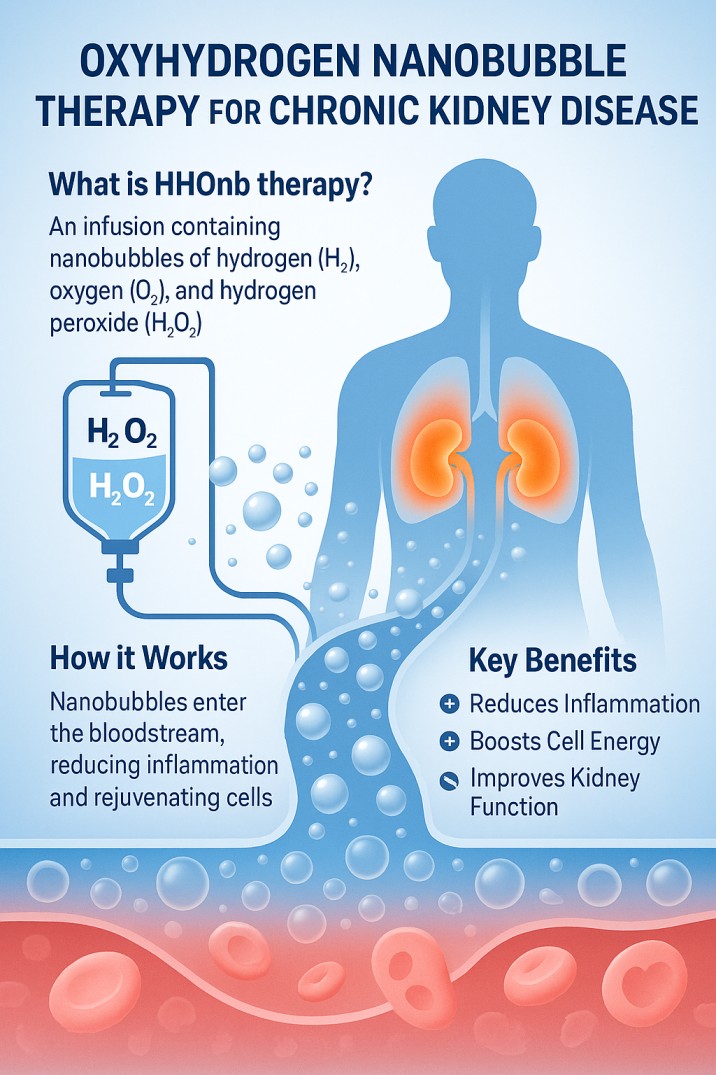
Chronic kidney disease (CKD) is a long-term condition where kidney function gradually declines. People with CKD often experience symptoms such as fatigue, body swelling, and high blood pressure. In advanced stages, many patients require dialysis or even a kidney transplant. Amid the limitations of current treatments, a new hope is emerging from the field of nanotechnology: intravenous oxyhydrogen nanobubble therapy (HHOnb). Oxyhydrogen nanobubble is an infusion fluid that contains nano-sized bubbles filled with hydrogen (H₂), oxygen (O₂), and a small amount of hydrogen peroxide (H₂O₂). These bubbles are extremely small, allowing them to penetrate deep into body tissues. This combination of gases is known to have powerful antioxidant and anti-inflammatory effects, which are crucial in repairing kidney cell damage and improving organ function.
A case report illustrated initial results from using HHOnb in three patients with different stages of CKD. Each patient received 10 infusions of HHOnb over a period of 2 to 3 months. The outcomes were promising, showing both clinical and laboratory improvements. Mechanistically, the hydrogen in HHOnb works by neutralizing free radicals—harmful molecules that form in the body and can damage kidney cells. These free radicals often increase during stress, inflammation, or tissue damage and, if left unchecked, can accelerate the decline in kidney function. Hydrogen helps “disarm” these free radicals before they cause further harm. Additionally, it stimulates the body’s natural production of antioxidants, which are protective compounds that maintain the balance and health of cells.
The oxygen in HHOnb also plays a vital role. It boosts cellular metabolism, meaning kidney cells can work more efficiently because they have enough energy. This process acts like supplying extra "fuel" for the cells to survive and repair themselves. Meanwhile, the small amount of hydrogen peroxide—despite sounding dangerous—is actually beneficial at low concentrations. It acts as a biological signal that triggers tissue repair, speeds up regeneration, and stimulates new tissue formation. With these three components—hydrogen, oxygen, and hydrogen peroxide—HHOnb works like a rescue team that enters damaged kidney areas: reducing inflammation, repairing damage, and energizing cells to recover. This is the basis of why nanobubble therapy shows promising results in patients with chronic kidney disease.
One major advantage of HHOnb therapy is its simple delivery method via infusion, with minimal side effects, and the ability to produce noticeable results in a relatively short period. Although still based on a small-scale study, this therapy shows great potential as a supportive treatment for CKD patients, especially those whose kidney function continues to decline despite standard treatments. However, it is important to note that this study is still in its early stages and did not involve a control group. Further research involving larger numbers of patients and longer observation periods is needed to confirm its long-term benefits and safety. If results remain consistent, HHOnb could eventually become part of the standard care for CKD. In summary, oxyhydrogen nanobubble therapy offers a smart and safe new way to support people with chronic kidney disease. By utilizing molecular technology and the ability of nanobubbles to penetrate tissues, this therapy symbolizes a new hope—that small innovations can bring big impacts to human health.
Reference:
Indrajani, P. W. M., Hernowo, A. T., Ekasari, C. P., Yudhanata, R., & Sumitro, S. B. (2024). The Effect of Intravenous Oxyhydrogen Nanobubble on Chronic Kidney Disease: Case Series. Preprints.org. https://doi.org/10.20944/preprints202406.1114.v1