Oxygen and Hydrogen Nanobubbles: A New Hope in Combating Obesity
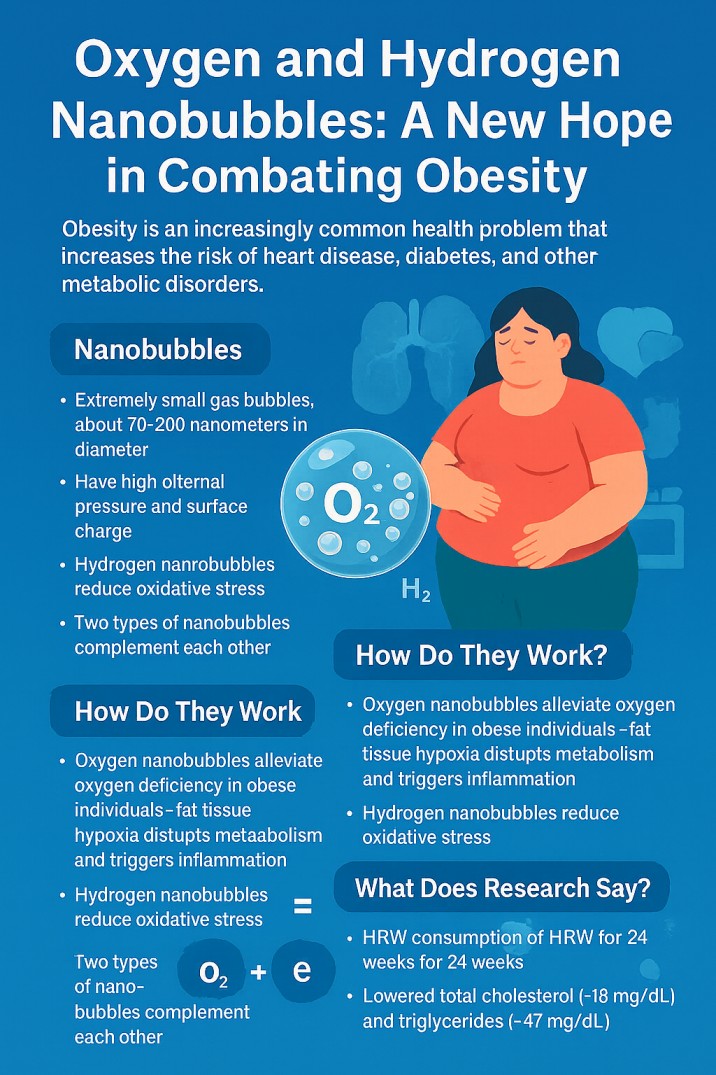
Obesity is an increasingly common health problem, characterized by excessive fat accumulation that not only alters body shape but also raises the risk of heart disease, diabetes, and other metabolic disorders. Until now, treatments have mostly relied on diet, exercise, or medication. However, science is now offering a new and intriguing innovation — oxygen and hydrogen nanobubbles.
Nanobubbles are extremely small gas bubbles, about 70–200 nanometers in diameter, that can remain stable in liquids for a long time without bursting easily. Unlike ordinary bubbles, nanobubbles have high internal pressure and surface charge, which make them stable and allow gases such as oxygen or hydrogen to dissolve more effectively in water. Because of these properties, nanobubbles can carry therapeutic gases more efficiently, allowing the body to absorb them better when consumed or used in therapy. The Indonesian Molecule Institute (IMI) has developed nanobubbles as a medical technology, for example as an additional therapy for degenerative and metabolic disorders. The institute emphasizes that their nano-sized bubbles can penetrate delicate tissues, deliver gases directly to cells — even to the mitochondria — and support cellular repair functions. Hydrogen nanobubbles act as antioxidants and anti-inflammatory agents, while oxygen nanobubbles help increase tissue oxygenation.
How Do They Work?
In individuals with obesity, fat tissue often experiences oxygen deficiency, or hypoxia. This condition disrupts metabolism and triggers inflammation in the body. The presence of oxygen nanobubbles can help alleviate this issue, as their tiny size allows them to deliver extra oxygen directly to tissues. With better oxygen supply, cells can burn fat more efficiently, reducing inflammation in the process. Hydrogen nanobubbles work differently. Hydrogen acts as a selective antioxidant that effectively neutralizes excess free radicals — reactive molecules that are often elevated in obesity and worsen inflammation. With the help of hydrogen nanobubbles, oxidative stress can be reduced, inflammation subsides, and cells regain their optimal function. Together, the two types of nanobubbles complement each other: oxygen supports smoother metabolism, while hydrogen calms the inflammation caused by fat accumulation.
What Does Research Say?
A randomized controlled clinical trial conducted by LeBaron and colleagues in 2020 provided compelling evidence on the benefits of hydrogen-rich water (HRW) for individuals with metabolic syndrome. The study involved 60 participants—both men and women—who consumed HRW for 24 weeks. The results showed notable improvements across various health indicators. After six months, participants who drank HRW experienced a reduction in total cholesterol by approximately 18 mg/dL and triglycerides by about 47 mg/dL. In addition, fasting blood glucose and glycated hemoglobin (HbA1c) levels decreased by around 12 percent, indicating better glucose regulation.
Furthermore, the study found reductions in inflammatory biomarkers such as TNF-α, IL-6, and CRP, alongside increases in natural antioxidants like vitamins C and E. Improvements were also observed in body mass index (BMI) and waist-to-hip ratio (WHR), with no adverse effects reported. The researchers concluded that hydrogen plays an important role in enhancing mitochondrial function—the cell’s energy powerhouse—by stimulating energy (ATP) production and maintaining redox balance at the cellular level. These effects make hydrogen a promising, safe, and effective metabolic support therapy to help reduce the risk of obesity-related diseases.
Looking ahead, oxygen and hydrogen nanobubbles are seen as promising, safe, and non-invasive adjunct therapies for managing obesity. Hydrogen nanobubble water has the potential to reduce inflammation and improve metabolism, while oxygen nanobubble water could enhance calorie burning during exercise and protect organs such as the liver from fat accumulation. Nevertheless, this technology is not a “magic pill” for slimming down — a healthy diet and regular exercise remain the main keys to success. With their ability to improve tissue oxygenation, reduce oxidative stress, and suppress inflammation, nanobubbles offer a new hope in the field of health, though further research is still needed before they can be widely applied in clinical settings.
Source:
LeBaron, T. W., Singh, R. B., Fatima, G., Kartikey, K., Sharma, J. P., Ostojic, S. M., Gvozdjakova, A., Kura, B., Noda, M., Mojto, V., Niaz, M. A., & Slezak, J. (2020). The effects of 24-week, high-concentration hydrogen-rich water on body composition, blood lipid profiles and inflammation biomarkers in men and women with metabolic syndrome: A randomized controlled trial. Diabetes, Metabolic Syndrome and Obesity: Targets and Therapy, 13, 889–896. https://doi.org/10.2147/DMSO.S240122