Nanobubble Therapy: A New Hope for DMD Patients
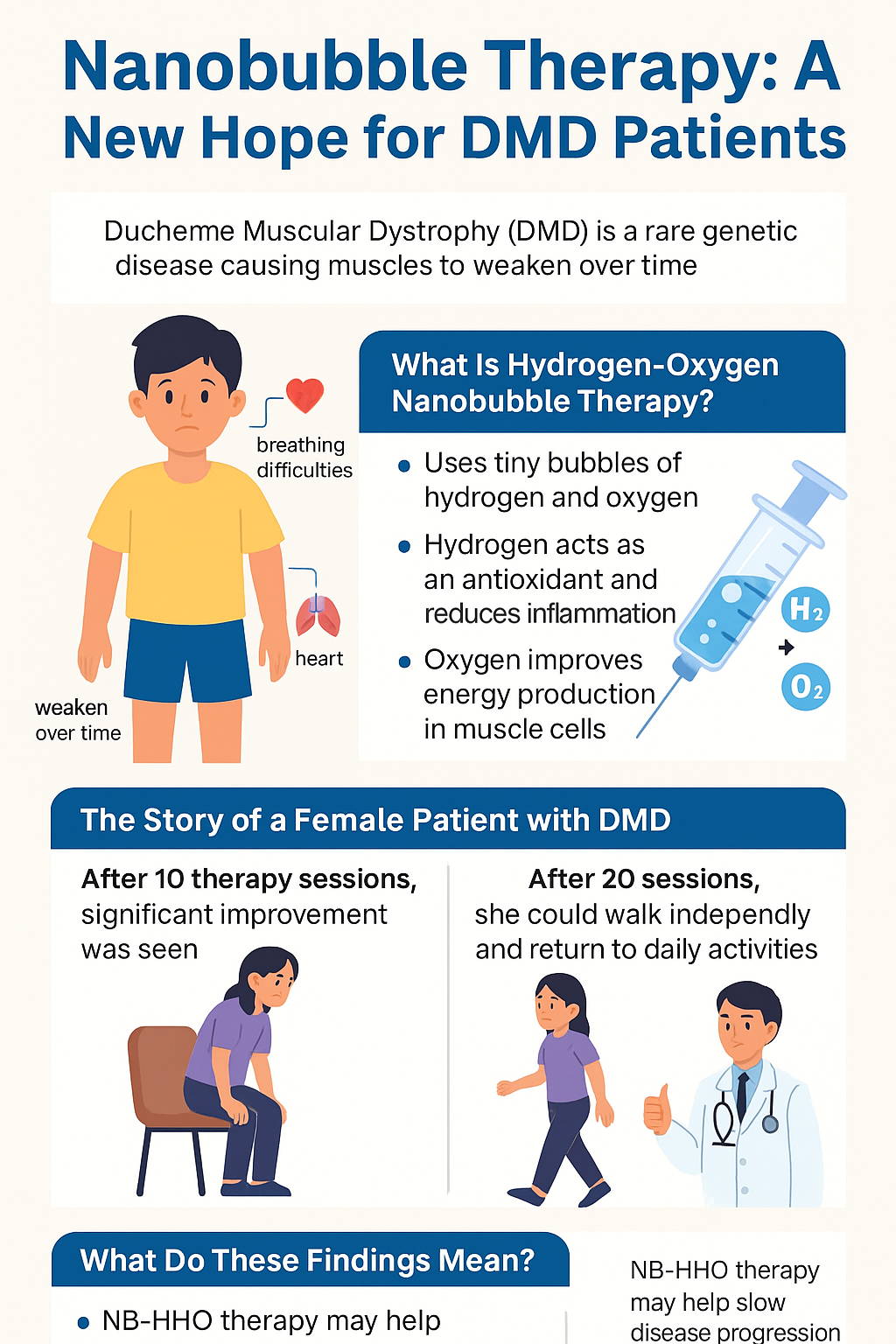
Duchenne Muscular Dystrophy (DMD) is a rare genetic disease that causes muscles to weaken progressively over time. The condition usually affects boys, but in rare cases, girls can also develop it. DMD is caused by mutations in the dystrophin gene, which produces an important protein that keeps muscles strong and stable. Without this protein, muscles are easily damaged, leading to gradual loss of mobility, breathing difficulties, and even heart complications. For now, the mainstay treatment for DMD is corticosteroid therapy. While these drugs can slow muscle damage, their long-term side effects—such as weight gain and osteoporosis—are a major concern. This is why scientists are actively searching for safer alternative therapies.
What Is Hydrogen-Oxygen Nanobubble Therapy?
One promising new approach being studied for DMD patients is hydrogen-oxygen nanobubble therapy (NB-HHO). This therapy uses extremely tiny gas bubbles—called nanobubbles—filled with a mixture of hydrogen and oxygen. Because of their nano size, these bubbles can flow through blood vessels without blocking them, allowing the gases to be absorbed more efficiently by body tissues. Hydrogen in nanobubbles works as a powerful antioxidant, neutralizing free radicals—harmful molecules that damage muscle cells and accelerate weakness in DMD. Hydrogen also reduces inflammation by lowering levels of pro-inflammatory cytokines, such as interleukin-6 (IL-6), which are often elevated in DMD patients and worsen muscle degeneration.
Meanwhile, oxygen in nanobubbles boosts oxygen supply to weakened muscles and supports mitochondrial function—the “power plants” of cells that generate energy. With sufficient oxygen, cells can produce energy in the form of ATP (adenosine triphosphate) more efficiently, while also lowering the production of harmful free radicals. This combination helps muscle tissue resist further damage. Importantly, NB-HHO therapy can be combined with physiotherapy or standard treatments, potentially enhancing rehabilitation outcomes without the heavy side effects often associated with conventional drugs.
The Story of a Female Patient with DMD
In this case report, an 18-year-old female diagnosed with DMD underwent 20 intravenous sessions of NB-HHO therapy, combined with physiotherapy and nutritional supplementation. Before starting therapy, she experienced progressive weakness in her leg muscles, difficulty standing up, and showed a positive Gower’s sign—a classic symptom of DMD where patients must use their hands to push themselves up from a sitting position. After 10 therapy sessions, significant improvements were observed. She was able to stand from sitting in under 20 seconds, her Gower’s sign turned negative, and her lower limb strength improved from 4/5 to 5/5. She also began walking more smoothly without assistive devices, demonstrating clear motor function recovery.
The positive progress continued until the end of 20 sessions. She could walk independently without a cane, quickly transition from sitting to standing without using her hands, and actively rejoin her daily and school activities. She even completed a job training program successfully—something previously impossible due to her physical limitations. Although she still experienced mild hip pain, likely due to her body adjusting to a new walking pattern, her overall condition was much fitter, and she felt more energetic in her daily life.
What Do These Findings Mean?
This case suggests that NB-HHO therapy may serve as a complementary treatment for DMD patients. While it cannot replace standard therapies, it could help slow muscle deterioration and improve quality of life. However, it is important to note that these results come from a single case report. Larger clinical trials are still needed to confirm the safety and effectiveness of this approach before it can be widely adopted in hospitals. Even so, with the advancement of nanobubble technology, the future of rare disease therapies like DMD looks more promising. This innovation may one day help patients maintain muscle function longer, live more independently, and enjoy a better quality of life.
Source: Sudarwanto, G., & Layla, A. (2025). Hydrogen-oxygen nanobubble therapy as a complementary approach in a female patient with Duchenne muscular dystrophy (DMD): A case report. Preprints, 2025091031. https://doi.org/10.20944/preprints202509.1031.v1