
Laughing Gas (N₂O) and Drug Rehabilitation: Facts and Limitations
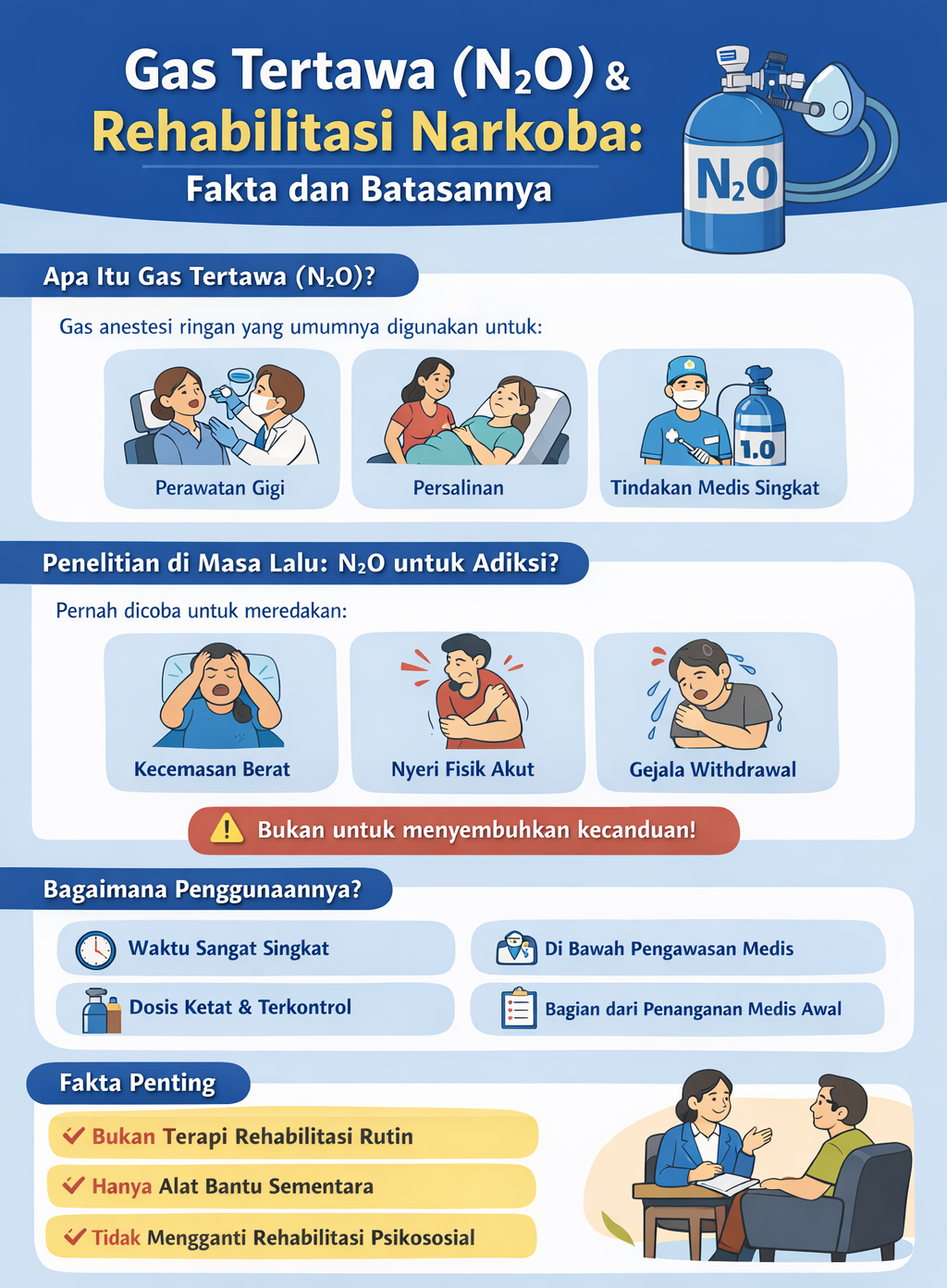
In everyday medical practice, dinitrogen oxide (N₂O) is widely known as laughing gas, a mild anesthetic used to help patients feel more relaxed and reduce pain during short medical procedures. Common examples include dental treatments, minor hospital procedures, or childbirth. The effects of N₂O appear quickly and also wear off relatively fast once administration is stopped, which is why it is considered practical and safe when used according to medical guidelines.
Beyond this well-known use, however, there is a lesser-known historical fact. Several decades ago, a number of researchers—particularly in Europe—explored whether N₂O could be used to help manage acute conditions experienced by patients with substance dependence, especially during the early phase of stopping drugs or alcohol. The focus of these studies was not to cure addiction, but rather to relieve temporary symptoms that often arise suddenly and severely, such as extreme anxiety, physical pain, and intense discomfort as the body adapts to the absence of addictive substances.
It is important to understand that this approach is very different from modern drug rehabilitation programs as we know them today. Addiction rehabilitation is a long-term process involving psychological therapy, behavioral change, social support, and ongoing guidance. In contrast, the use of N₂O in these studies was very short-term, conducted in medical facilities, with strict dosing, and under direct supervision by healthcare professionals.
What Was the Aim of These Studies?
In these studies, the goal of using N₂O was not to treat addiction itself, but to help patients endure the most difficult phase of substance withdrawal. During the early stages of withdrawal, both the body and the mind can react intensely, producing overwhelming anxiety, uncontrollable restlessness, and severe psychological tension. In certain cases—particularly opioid withdrawal—patients may also experience intense physical pain throughout the body. In addition, acute withdrawal symptoms from alcohol or opioids can appear suddenly and cause severe discomfort in a short period of time. In this context, N₂O was viewed as a temporary supportive tool, used in a limited manner to ease these symptoms so that patients could pass through the critical early phase more safely and in a medically controlled way, before continuing with the actual rehabilitation process.
How Was N₂O Used in These Studies?
The use of N₂O followed very strict rules and was entirely different from uncontrolled or recreational use. The gas was administered only for very short durations, not as a repeated or ongoing therapy, and always under direct medical supervision in healthcare facilities. Dosages were carefully controlled to avoid producing effects similar to recreational misuse. Moreover, N₂O was never used as a stand-alone treatment, but only as a small component of initial medical management aimed at relieving specific symptoms. With this approach, N₂O was positioned purely as a temporary symptomatic intervention, not as a long-term solution for addiction recovery.
Key Takeaway
Several small studies in the past did explore the use of N₂O to help reduce anxiety, pain, and acute withdrawal symptoms under specific conditions. However, its use was highly limited, temporary, and always under strict medical supervision. N₂O is not a routine therapy and not a substitute for psychosocial rehabilitation, which remains the foundation of addiction recovery. Understanding these limitations is essential so that the public does not misinterpret the role of N₂O in healthcare.
Sources:
Buhre, W., Disma, N., Hendrickx, J., DeHert, S., Hollmann, M. W., Huhn, R., Jakobsson, J., Nagele, P., Peyton, P., & Vutskits, L. (2019). European Society of Anaesthesiology Task Force on Nitrous Oxide: a narrative review of its role in clinical practice. British Journal of Anaesthesia, 122(5), 587–604. https://doi.org/10.1016/j.bja.2019.01.023