
Hydrogen Nanobubbles: Tiny Bubbles with a Big Impact on Heart Health
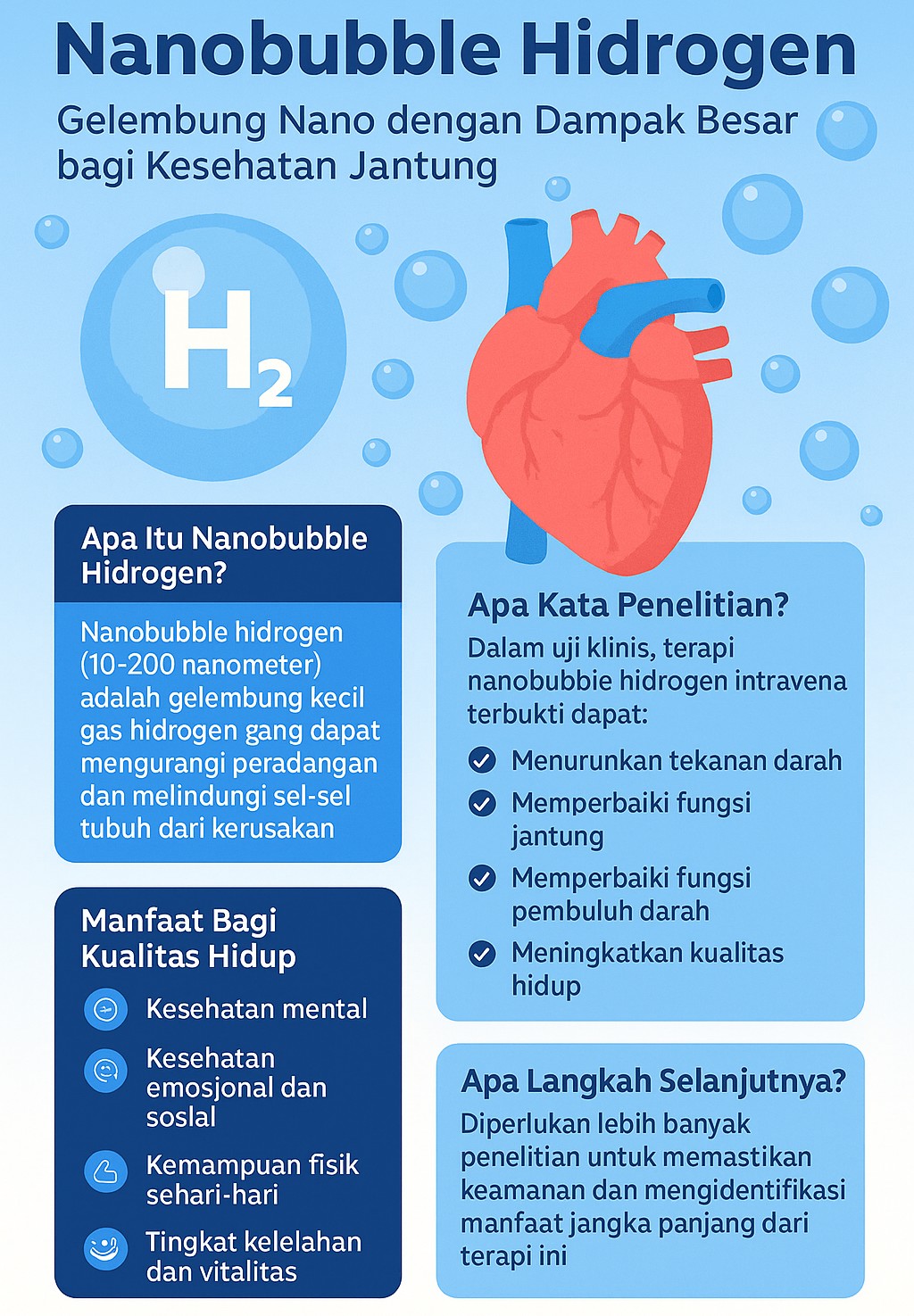
Did you know that there are bubbles so incredibly small—much smaller than a strand of human hair—that they can bring significant benefits to heart health and overall quality of life? This is the idea behind a breakthrough technology called Hydrogen Nanobubbles. This innovation is currently gaining attention from scientists and healthcare professionals as one of the most promising developments in modern medicine. In simple terms, hydrogen nanobubbles or HNBs are tiny hydrogen gas bubbles, only about 10 to 200 nanometers in size. Because of their ultra-small size, these bubbles can move freely within the body, penetrate tissues down to the cellular level, and stay intact longer than ordinary bubbles that burst quickly. This unique property gives HNBs a big advantage when it comes to delivering beneficial substances throughout the body.
Why use hydrogen gas? The answer lies in hydrogen's natural ability to act as a selective antioxidant. This means hydrogen can neutralize harmful free radicals—those unstable molecules that damage cells and accelerate aging and disease—without interfering with the beneficial free radicals that the body needs for normal functioning. In addition, hydrogen is also known to have anti-inflammatory effects, which help reduce inflammation in the body. Chronic inflammation, as we know, is the root cause of many modern diseases, from heart disease and diabetes to various metabolic disorders.In short, despite their incredibly small size, hydrogen nanobubbles offer big benefits. These tiny bubbles help reduce inflammation in the body and protect cells from damage. As a result, heart health can be better maintained, and the body can feel healthier and more energetic.
How Do Hydrogen Nanobubbles Work in the Body?
Recent research shows that hydrogen nanobubbles, when administered intravenously—meaning through an infusion directly into the bloodstream—can help improve several key aspects of heart health. This therapy has been shown to lower blood pressure, both the top number (systolic) and the bottom number (diastolic), which means the heart doesn’t have to work as hard to pump blood throughout the body. In addition, hydrogen nanobubbles also help enhance heart function, including improving the heart’s pumping ability and helping the heart muscle relax better during rest. Not only that, this therapy can also improve blood vessel health by increasing the elasticity of vessel walls and smoothing blood flow. This is especially important because stiff or clogged blood vessels are often the cause of heart disease and stroke. Interestingly, the benefits of this therapy are not limited to heart function but also extend to overall quality of life—improving physical health, mental well-being, and daily comfort. All of these benefits come from hydrogen nanobubbles’ ability to fight two of the body’s main enemies: oxidative stress and inflammation. These two factors often lead to cellular damage, accelerate organ aging, and trigger various chronic diseases. By reducing oxidative stress and inflammation, the body becomes healthier, more energetic, and the heart can function more optimally.
What Does the Research Say? Scientific Evidence Behind Hydrogen Nanobubble Benefits
In a clinical trial involving 52 participants, researchers divided them into six groups: one group received no hydrogen nanobubbles (only normal saline), while the other five groups received varying doses of hydrogen nanobubbles over five weeks. The results were very promising. On average, systolic blood pressure—the top number—dropped from around 145 mmHg to 130 mmHg after therapy. Diastolic pressure—the bottom number—also showed a significant decrease. This means the heart’s workload became lighter, reducing the risk of heart problems.
Moreover, several important indicators related to heart function and blood vessel flexibility also showed improvements. The heart could pump blood more efficiently, and the blood vessels became more elastic, allowing for better circulation. Even more encouraging, participants also reported better overall health, including improvements in mental well-being, social interactions, and reduced physical pain. What’s impressive is that these improvements were already noticeable after just 10 therapy sessions, indicating that hydrogen nanobubbles could bring relatively fast results and have the potential to be a safe, beneficial therapy for maintaining heart health and enhancing quality of life.
Benefits for Quality of Life
The benefits of hydrogen nanobubbles were not only felt in the heart. Participants in the study also reported feeling improvements in their mental health, becoming calmer and more positive. There was also an increase in emotional well-being and social relationships, making them feel more comfortable in interacting with others. On the physical side, many participants felt stronger and more capable of carrying out daily activities. However, for aspects such as energy levels and vitality, although some improvement was noted, additional approaches may be necessary to achieve better results. These findings confirm that health is not just about the condition of internal organs but also about how we feel, think, and live our daily lives.
This research also shows that hydrogen nanobubbles are safe to use, provided the dosage is appropriate. Like many other therapies, if the dose is too high, it could potentially cause unwanted effects. Therefore, finding the right dose is essential to ensure optimal benefits without introducing new risks to the body. These findings open new hope in the field of healthcare, particularly in heart disease treatment and improving quality of life. It is not impossible that in the future, hydrogen nanobubbles will become part of routine treatments for those who wish to live healthier, fitter, and happier lives.
Reference:
Hernowo, A. T., Subagjo, Indrajani, O., Sudarwanto, G., Sarwawati, Aristyani, S., & Sumitro, S. B. (2024). Intravenous hydrogen nanobubbles effect on cardiac physiology and quality of life: A single blind, dose-response study. Research Square. https://doi.org/10.21203/rs.3.rs-4677707/v1