
Hope from a Small Molecule: The Potential of Low-Dose H₂O₂ for Neurodegenerative Diseases
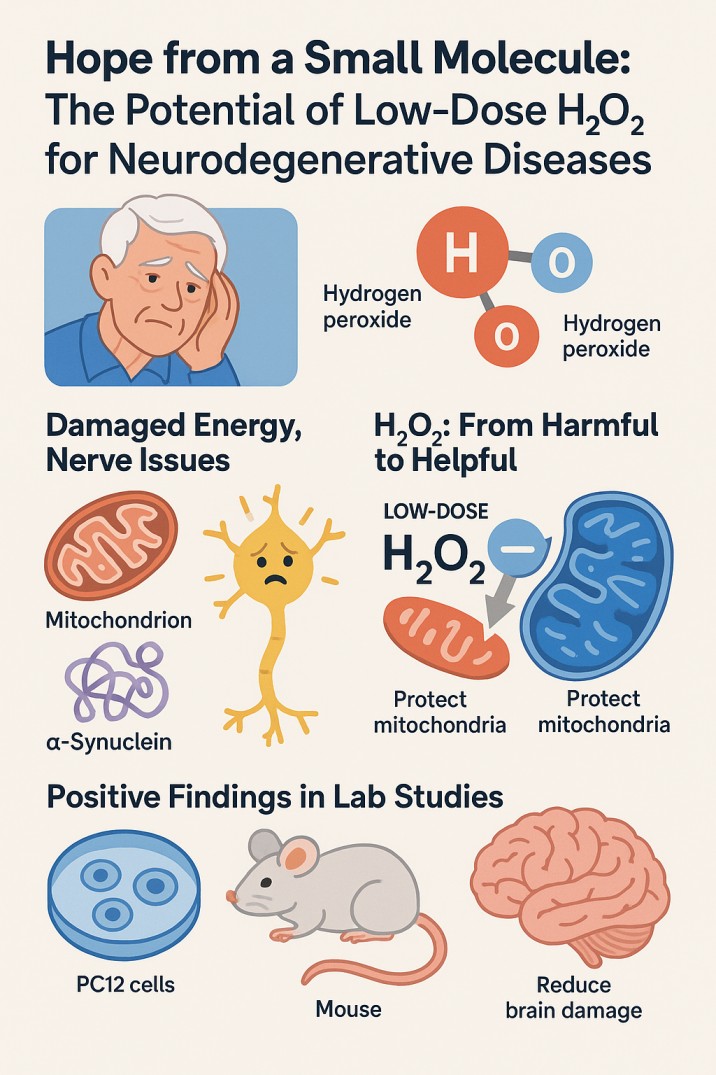
Neurodegenerative diseases like Parkinson’s and Alzheimer’s are becoming an increasingly alarming threat in modern society. These conditions attack the nervous system and gradually impair brain function. Symptoms such as tremors, memory loss, or difficulty speaking often arise due to nerve damage. Unfortunately, there is still no definitive cure. However, recent research brings new hope: the use of a small molecule long considered dangerous—hydrogen peroxide (H₂O₂)—in low doses to help protect the brain.
Our brain relies heavily on energy, most of which is produced by mitochondria—the “power plants” of our cells. When mitochondria are damaged, energy production falters, weakening nerve cells. In such conditions, a protein called α-synuclein can accumulate excessively in the mitochondria, worsening the damage and triggering nerve cell death. This is one of the key pathways involved in Parkinson’s and related diseases.
H₂O₂: Once Feared, Now Being Reconsidered
Hydrogen peroxide has long been known as an oxidative compound that can harm cells. But emerging studies suggest that in very low doses, H₂O₂ might actually benefit the body. It functions as a molecular signal, facilitating communication between cells and even supporting mitochondrial repair. Think of it like fire: a small flame can warm you, but a large one can burn. It’s the dose that determines whether it's helpful or harmful.
Computer simulations (in-silico studies) show that H₂O₂ can interfere with harmful bonds between α-synuclein and other proteins in the mitochondria. This prevents further damage and helps preserve mitochondrial function. It’s similar to wedging something in between two dangerous parts to stop them from sticking together and causing harm. In cell studies (PC12 cells), low-dose H₂O₂ has been shown to prevent cell death due to oxidative stress. Moreover, in animal models (rats with brain injuries such as stroke), H₂O₂ administration significantly reduced brain tissue damage and improved recovery. This indicates that the molecule may have protective effects—not just toxic ones, as previously believed.
Why Is This Important?
Because most current treatments for neurodegenerative diseases focus only on symptoms, not on the root cause. If low-dose H₂O₂ can truly preserve mitochondrial function and prevent nerve cell damage, it could represent a revolutionary new therapeutic approach. Furthermore, H₂O₂ is a simple molecule that’s easy and inexpensive to produce—making it far more affordable than many high-cost therapies.
While the initial results are promising, the use of low-dose H₂O₂ in humans remains in the exploratory stage. Large-scale clinical trials and long-term monitoring are essential. It’s also crucial to ensure that the administered doses are safe, effective, and precisely targeted.
Closing Thoughts
Scientific breakthroughs often come from the most unexpected places. Hydrogen peroxide, commonly known as a disinfectant or bleaching agent, might just turn out to be a powerful brain protector. With a cautious and evidence-based approach, we can hope that this tiny molecule will have a big impact on the future of neurodegenerative therapy.
Reference:
Widyarti, S., Wibowo, S., Sabarudin, A., Abhirama, I., & Sumitro, S. B. (2023). Dysfunctional energy and future perspective of low dose H₂O₂ as protective agent in neurodegenerative disease. Heliyon, 9, e18123. https://doi.org/10.1016/j.heliyon.2023.e18123