
Healing Crisis and Oxyhydrogen Nanobubbles: What Happens When the Body Starts to Heal?
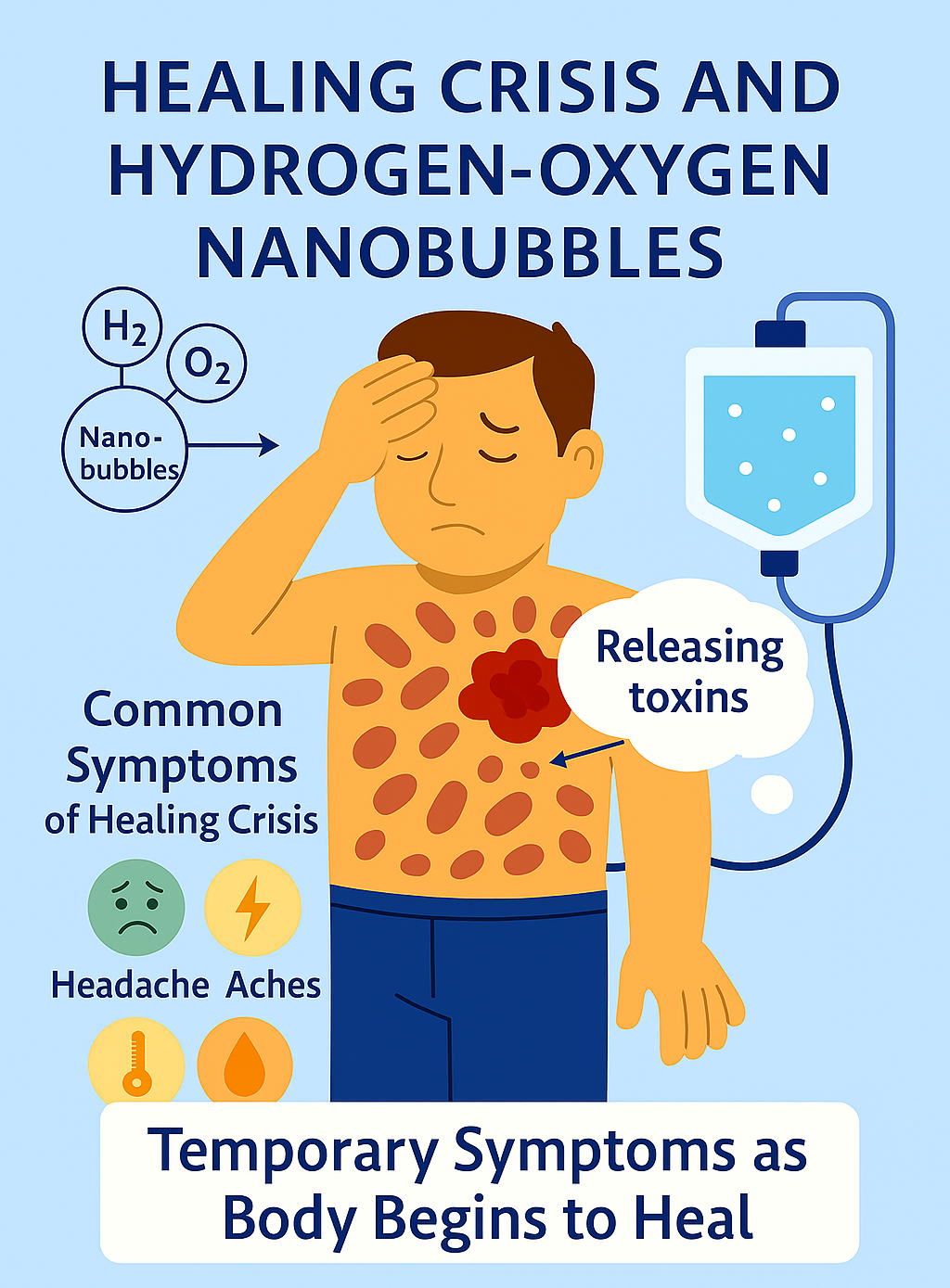
Have you ever felt more tired, dizzy, or nauseous after undergoing a health treatment? If so, you may have experienced a healing crisis—a condition that is actually a positive sign: your body is beginning the healing process. Now, with the growing popularity of oxyhydrogen nanobubble infusion therapy (HHO), this phenomenon is once again widely discussed. But what exactly is a healing crisis?
What Is a Healing Crisis?
A healing crisis is a temporary reaction that can occur when someone begins a health treatment. During this phase, the body may feel more tired, dizzy, or experience other uncomfortable symptoms. But don’t worry—this reaction is not a sign of treatment failure, but rather an indication that the body is working hard to eliminate toxins, pathogens, and damaged cells that have been hidden or accumulated over time.
One of the therapies currently used in molecular approaches is oxyhydrogen nanobubble infusion, a treatment that utilizes ultra-small bubbles containing a mixture of oxygen (O₂) and hydrogen (H₂) gases. These tiny bubbles can penetrate body tissues down to the cellular level and provide powerful benefits. As these nanobubbles enter the body, they work by neutralizing free radicals, reducing chronic inflammation, increasing cellular energy production (ATP), and supporting the body’s natural detoxification process. However, during this process, previously hidden toxins are released into the bloodstream—and this is where the healing crisis can occur.
Common Symptoms of a Healing Crisis
Some of the most common symptoms during a healing crisis include headaches, nausea, mild vomiting, or even diarrhea. The body may also feel fatigued, weak and similar to flu-like symptoms.
In some cases, a healing crisis can also cause low-grade fever, skin rashes, dizziness, or a racing heartbeat. These symptoms appear because the body is actively flushing out unwanted substances, such as toxins, metabolic waste, and dead microorganisms resulting from the treatment. Although these symptoms may feel unpleasant, there is no need to panic. They are temporary, usually lasting only a few hours to a few days, depending on each person’s condition. In fact, they can be a sign that the therapy is working and the body is moving toward better health.
What Happens Inside the Body During a Healing Crisis?
When you undergo a detox-based therapy—such as oxyhydrogen nanobubble infusion—the body goes through a series of internal changes to eliminate harmful substances that have built up over time. This can trigger temporary healing crisis reactions. Here's what happens inside your body:
First, toxins are released from tissues. Harmful substances like heavy metals, pesticides, and metabolic waste stored in the liver, fat tissue, or even bones are released into the bloodstream. This puts extra pressure on the liver and kidneys, which work hard to filter and eliminate them, possibly leading to symptoms such as headaches, nausea, or fatigue. Second, the body responds with an immune and inflammatory reaction. When pathogens like bacteria or fungi die due to the therapy, they release toxins (endotoxins), which trigger the immune system. This can result in mild fever, aches, or swollen lymph nodes.
Third, in more intense cases, a Herxheimer reaction may occur. This is a stronger response when too many microbes die at once. The body becomes overwhelmed, leading to symptoms such as severe headaches, extreme fatigue, or low blood pressure. Fourth, the detox process can trigger temporary oxidative stress. As the body breaks down toxins, it may generate high amounts of free radicals. If the body's antioxidant reserves are insufficient, this can lead to fatigue, brain fog, or joint pain.
Lastly, the body may experience electrolyte imbalance. As toxins are expelled through sweat or urine, essential minerals like sodium, potassium, and magnesium can also be lost—causing muscle cramps, dizziness, or a pounding heart.
Why Is This a Good Thing?
A healing crisis is a normal part of the body’s healing process. These reactions happen because the body is trying to get rid of things it no longer needs—like toxins or leftover waste. Even though it may feel uncomfortable, the symptoms indicate that the treatment is working and the body is adjusting itself to become healthier.
To help your body go through a healing crisis more comfortably, there are a few simple but important things you can do. First, drink plenty of water to help the liver and kidneys flush out toxins more quickly through urine. Second, get enough rest so your body can focus its energy on healing. You should also choose light and nutritious foods, like soup, fruits, or steamed meals, to ease your digestion.
Whenever possible, avoid stress and heavy physical activity during the healing crisis, as your body needs calm and recovery. So, a healing crisis is not a sign of failure, but rather a sign that your body is starting to clean itself and recover its health. With the help of oxyhydrogen nanobubble therapy, the body is supported in flushing out toxins, repairing damaged cells, and restoring the balance of the immune system.
Referensi
- https://www.healthline.com/health/healing-crisis#about
- Gunnarsdottir TJ, Jonsdottir H. Healing crisis in reflexology: Becoming worse before becoming better. Complementary Therapies in Clinical Practice. 2010;16(4):239-243. doi:10.1016/j.ctcp.2010.01.005
- Helal, S. S. (2014). Oxygen Therapy. Egyptian Journal of Occupational Medicine, 38(1), 111–123.